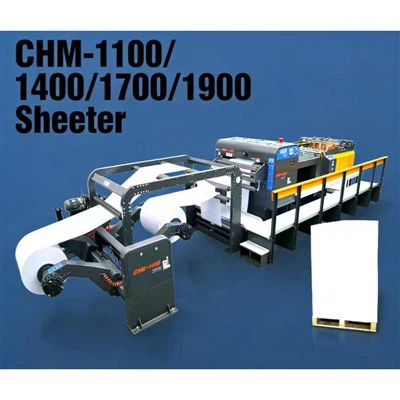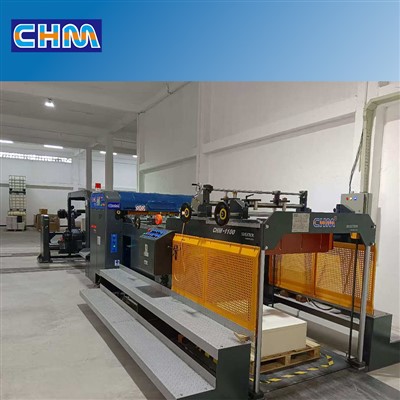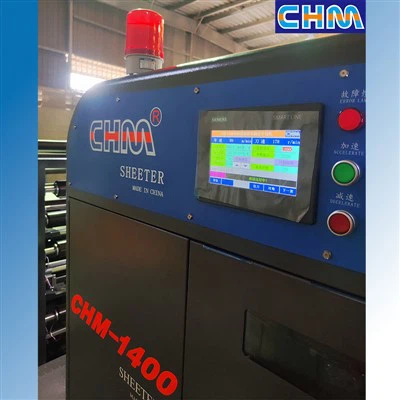
The automatic corrugated paper laminating machine is a high-precision processing equipment for laminating the surface of corrugated cardboard. It integrates feeding, positioning, hot-press lamination, trimming, and rewinding, offering high efficiency, stability, and diverse processing capabilities. Its technical features are mainly reflected in its precise structural design, intelligent control system, wide process adaptability, and balance of energy efficiency and quality, providing a reliable automation solution for the packaging and printing industry.
I. Structural Integration and Robust Rigidity
The equipment adopts an integral welded frame and high-precision guide rails, providing high rigidity and good vibration resistance, capable of withstanding high-speed continuous operation loads. Modular arrangement of feeding, unwinding, lamination, and trimming units saves space and facilitates maintenance and functional expansion. Key transmission components such as the unwinding shaft and lamination rollers undergo dynamic balancing to reduce operational deviations and ensure a smooth lamination process and uniform film surface.
II. Intelligent Control and Precise Execution
Equipped with a PLC and touchscreen human-machine interface, it can preset and store multiple sets of process parameters, enabling rapid switching between different products. The temperature control system supports multi-segment independent heating, adapting to the heat-melting characteristics of various film materials (example data: common heat-laminating temperatures are approximately 120℃~160℃, with temperature control accuracy up to ±2℃). Tension closed-loop control adjusts the film unfolding speed in real time, ensuring strict synchronization with the cardboard conveyor speed to prevent wrinkling, stretching, or film waste. A photoelectric or ultrasonic alignment system automatically corrects positional deviations between the cardboard and film, improving registration accuracy.
III. Multifunctional Lamination and Process Adaptability: It can handle cardboard of different flute types, including single and double corrugated, E-flute, and B-flute, and is compatible with PET, BOPP, PVC, and metal foil films, achieving various surface effects such as glossy, matte, scratch-resistant, and waterproof. It supports full-page lamination and partial pattern lamination, meeting the diverse needs of high-end customized packaging. Cold lamination and hot lamination modes can be freely switched, expanding the range of applicable processes.
IV. Automation and Continuous Operation Advantages: Automatic feeding and receiving devices reduce manual intervention, and the trimming mechanism allows for quick blade replacement and depth adjustment to adapt to different film thicknesses and widths. The self-diagnostic function monitors temperature, pressure, film material balance, and cardboard arrival signals in real time. It automatically alarms and shuts down the machine for protection in case of abnormalities, shortening troubleshooting time. Some models support data networking and remote monitoring, facilitating production management and quality traceability.
V. High-Efficiency, Energy-Saving, and Environmentally Friendly Design New heating methods (such as infrared or electromagnetic heating) result in rapid temperature rise and low heat loss. Combined with high-efficiency servo or frequency converter drives, this reduces idle energy consumption. Centralized waste recycling and trimming collection designs reduce workshop pollution and material waste, aligning with green manufacturing principles.
In summary, the automatic corrugated paper laminating machine, with its robust structure, precise control, diverse processes, high degree of automation, and energy-saving and environmentally friendly features, significantly improves production efficiency while ensuring lamination quality, making it an important piece of equipment for modern corrugated paperboard deep processing.