An automatic binding machine is a mechanical device that automatically arranges, clamps, and binds loose sheets of paper or books according to a set method. It is widely used in office, printing, publishing, and document processing fields. Its design principle integrates multiple aspects such as paper feeding and positioning, clamping and pressing, binding methods, and cutting and collection, relying on mechatronics control to achieve efficient, accurate, and stable binding operations.
I. Overall Structure and Functional Division The equipment typically consists of a paper feeding mechanism, a page sorting unit, a positioning and clamping device, a binding execution mechanism, and a discharge system. The paper feeding mechanism uses paper feed rollers or suction rollers to separate sheets one by one, preventing double or multiple sheets from entering; the page sorting unit groups and arranges the papers according to a set quantity; the positioning and clamping device ensures that the paper does not shift during the binding process; the binding execution mechanism selects punching and threading, hot melt gluing, or metal clip fixing methods according to the process; the discharge system neatly delivers or stacks the finished products.
II. Paper Feeding and Positioning Principles The paper feeding process relies on a control method combining friction and airflow adsorption. The paper feed roller speed is matched to the paper thickness to avoid tearing. The paging unit detects the number of papers using photoelectric or mechanical counting; once a set value is reached, a clamping action is triggered. Positioning and clamping often employ adjustable pressure plates and side gauges to ensure the paper is aligned with a uniform reference in both the horizontal and vertical directions, providing stable conditions for subsequent binding.
III. Core Mechanisms of Binding Common hot melt adhesive binding involves heating a glue rod or glue tank, applying the molten adhesive to the spine, and then cooling and curing it with pressure rollers to complete the bonding (example data: glue temperature is typically controlled between 150℃ and 180℃); punched thread binding uses a punching die to create through holes at predetermined positions on the book pages, inserts thread or string, and locks it in place; metal clip binding relies on springs or electric grippers to push U-shaped staples into the spine, and then flattens and fixes them using shaping blocks. Different methods have their own design priorities in terms of power source, mold shape, and action sequence, all of which must ensure uniform force and prevent paper damage.
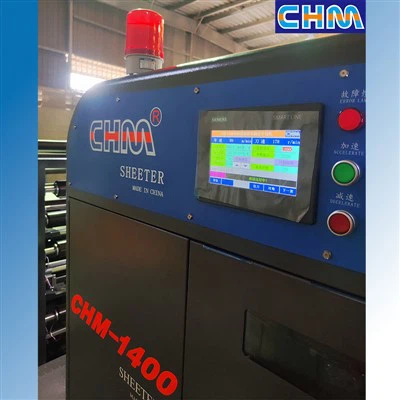
IV. Automatic Control and Feedback Adjustment Modern automatic binding machines generally use PLC or microcontroller control. Each actuator operates sequentially according to a preset program, and sensors monitor in real time the paper's position, clamping force, glue temperature, and threading success. If an anomaly occurs, such as paper jam, insufficient glue, or incomplete binding, the system will pause and alarm, prompting operator intervention. The touchscreen interface allows setting the number of pages to be bound, binding method, and production batch, facilitating quick task switching.
V. Design Considerations and Performance Optimization The design must comprehensively consider the paper weight range, upper limit of binding thickness, production efficiency, and operational safety. The transmission system uses low-noise, wear-resistant synchronous belts or gears to ensure long-term stable operation; the clamping and pressing mechanisms must have sufficient rigidity and adjustable stroke to adapt to different book sizes; the heat exchange efficiency of the heating and cooling units directly affects the binding quality and cycle time.
In summary, the design principle of automatic binding machines is based on precise feeding and positioning, which completes paper integration through selectable binding execution mechanisms, and achieves efficient and reliable batch processing with the help of automatic control. With its compact structure, coordinated movements and strong process adaptability, it is an important piece of equipment for the post-production of documents and publications.