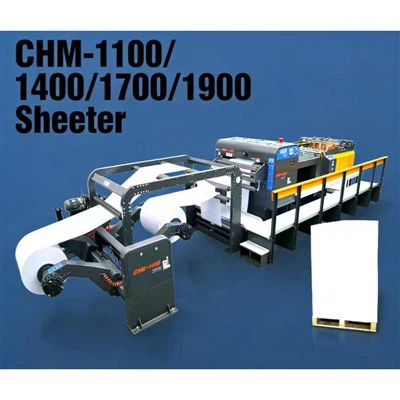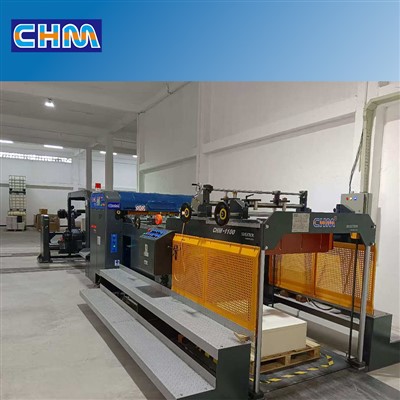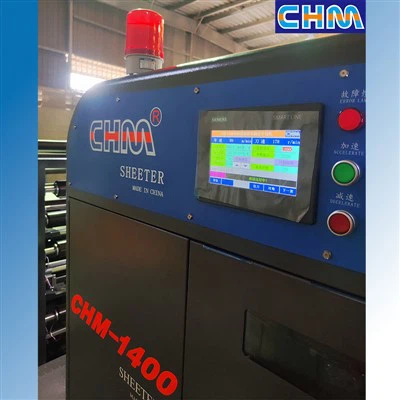
Cardboard laminating machines are susceptible to problems during production due to material properties, equipment condition, and process parameters, leading to issues such as wrinkling, bubbles, poor adhesion, and film waste. Systematic solutions address these typical issues to help quickly restore quality and efficiency and reduce downtime losses.
I. Causes and Solutions for Wrinkling Wrinkling is often caused by uneven film tension or unstable cardboard feeding. Check the unwind brake to ensure constant film tension; adjust the positions of the feed guide rollers and pressure rollers to ensure synchronized movement of the cardboard and film. If transverse ripples appear, appropriately reduce the laminating speed and add flattening rollers in the lamination zone to distribute stress. For cardboard with significant thickness differences, use segmented pressure to avoid uneven stress causing wrinkles.
II. Handling Bubbles and Poor Adhesion Bubbles often originate from unclean film surfaces, insufficient heating, or inadequate pressure. First, clean the surfaces of the film and cardboard to remove dust and grease. Verify that the temperature control system settings meet the film processing requirements (example data: common temperature for heat lamination is approximately 130℃~150℃), and calibrate the temperature sensor if necessary. Adjust the gap and pressure of the pressure rollers to ensure full adhesion between the film and cardboard. For cold lamination, use pressure-sensitive adhesive film with matching adhesion and check the uniformity of the adhesive application.
Third, Improvement of Film Waste and Uneven Cutting: Film waste often results from inaccurate unwinding and rewinding alignment or improper trimming device settings. A photoelectric alignment system should be activated to correct the film's path in real time. Regularly check the sharpness and installation angle of the trimming blades, and accurately set the cutting position according to the product width. For large-format lamination, pre-printed positioning marks can be used to assist alignment and reduce trial runs.
Fourth, Measures to Address Unstable Equipment Operation: If abnormal noises, speed fluctuations, or transmission slippage occur, first check the lubrication of the motor and reducer, and replenish or replace the lubricating oil as needed. Check the tension of the belts or chains to prevent slippage due to slack. Severe wear on the heating roller surface will affect the uniformity of heat conduction, requiring grinding or replacement according to the degree of wear. Regarding the electrical system, the control cabinet should be cleaned regularly to remove dust, and wiring terminals should be tightened to prevent signal interference and malfunctions.
V. Environmental and Material Matching Solutions
In high-humidity environments, film materials are prone to moisture absorption and blistering. The workshop should be equipped with dehumidification equipment or maintain ventilation, and film materials should be stored in a humidity-controlled warehouse. For cardboard prone to static electricity, ionizers can be installed to eliminate static electricity and reduce lamination defects caused by adsorbed impurities. Corresponding process parameter libraries should be established for different film materials (PET, BOPP, nylon, etc.) to facilitate rapid production changeovers.
VI. Systematic Prevention and Continuous Improvement
Establish equipment inspection checklists and problem logs, standardizing typical faults and solutions; regularly train operators to master parameter adjustment and basic troubleshooting skills. Combine production data and quality inspection results to analyze trends and optimize maintenance cycles and process windows, forming a closed-loop solution from prevention to correction.
In summary, solutions for cardboard laminating machines should begin with identifying the root cause of the problem, and comprehensively utilize parameter adjustments, structural optimization, environmental control, and process management to develop actionable countermeasures for different issues, thereby ensuring stable lamination quality, reducing waste, and improving the overall efficiency of the equipment.