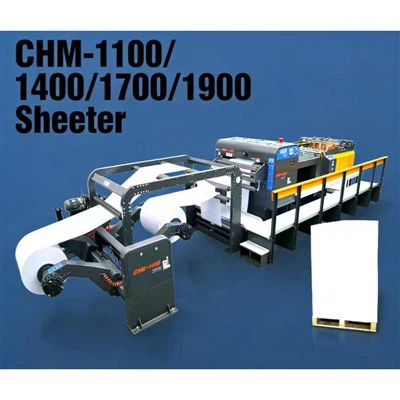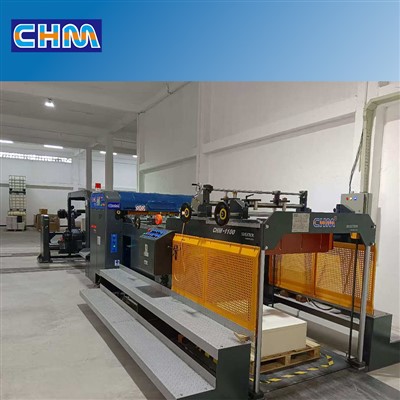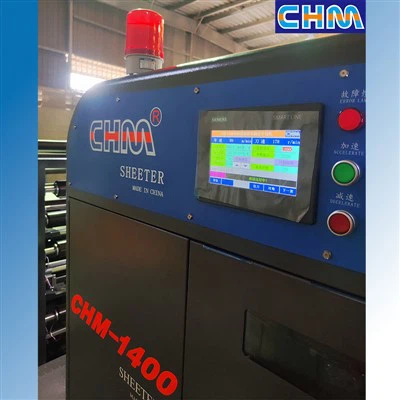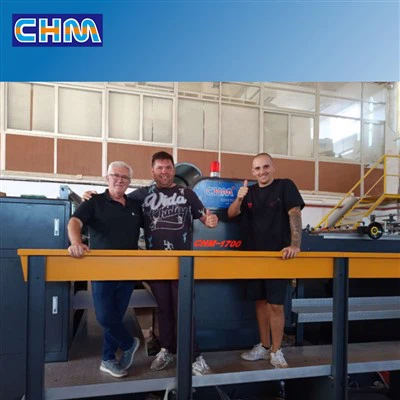
As an important piece of equipment in industrial automation, the blanking machine's design not only reflects its functional layout but also considers ease of operation and safety. Understanding its typical appearance features helps in quickly identifying the machine model, understanding its operating logic, and making reasonable arrangements on the production floor.
From an overall perspective, blanking machines are mostly vertical or benchtop structures. Vertical models have a taller body, occupy less space, and are often equipped with vertical or inclined feeding channels to facilitate the entry of raw materials from top to bottom into the cutting or separating area. Benchtop models are relatively compact and are mostly placed on a workbench, suitable for light-load or small-to-medium batch operations. Regardless of the form, the machine casing is mostly constructed of welded steel plates or aluminum alloy profiles, with a powder-coated or baked-on finish in commonly used industrial colors such as gray, blue, and white, which are both wear-resistant and rust-resistant.
The front is usually the main operating and observation area. A transparent protective cover or observation window is provided here for real-time monitoring of the cutting process, while also preventing hands from approaching moving parts for safety. The protective cover is typically made of high-strength acrylic or tempered glass, providing clear visibility and impact resistance. The control panel, located next to the protective cover or on the side of the machine, includes start, stop, and emergency stop buttons and a display screen. Its ergonomic layout allows for convenient operation while standing or sitting.
Feeding and discharging channels are visible on one side or at the rear of the machine. The feed inlet width matches the material size; some models are equipped with adjustable guide plates for centering rolls or sheets of varying widths. The discharge outlet is often funnel-shaped or features an inclined chute, guiding the material smoothly into the collection box or conveyor belt to prevent accumulation and jamming. Some large feeding machines are equipped with buffer brackets or counting sensors at the discharge end, visible as small indicator lights or signal windows.
The drive and transmission components are generally enclosed within the machine body, but the motor housing and cooling grilles are visible externally, ensuring effective ventilation and cooling of the power system. The base is designed with sturdy feet or a fixed seat with anchor bolts, enhancing vibration resistance and stability. Some high-end models feature model nameplates, safety warning labels, and operation flowcharts on the machine body, with concise and intuitive text and illustrations.
In terms of color scheme, the main body is predominantly a calm dark gray or industrial blue, supplemented by bright yellow or red warning areas to highlight key operational points and safety reminders. The overall design emphasizes a square and robust shape with simple lines and no unnecessary decorations, reflecting the utilitarian aesthetics of industrial equipment.
Overall, the appearance characteristics of the blanking machine are characterized by a compact structure, transparent protection, centralized operation, smooth feeding and discharging, and a stable base, while balancing durability and recognizability in terms of materials and colors. These features not only ensure the reliable operation of the equipment but also provide users with a safe and intuitive operating experience.