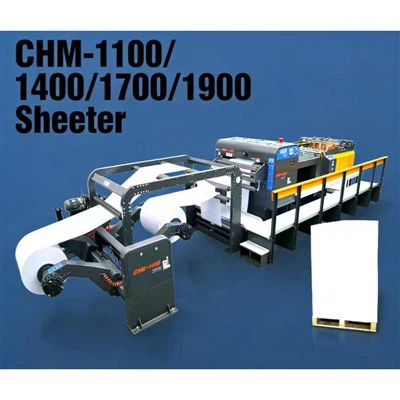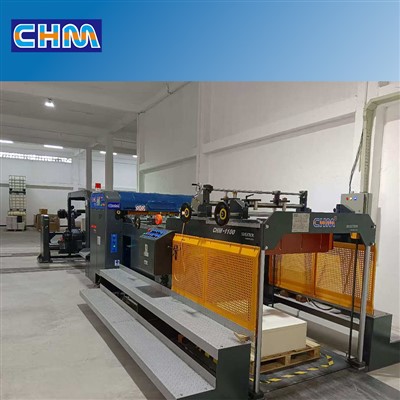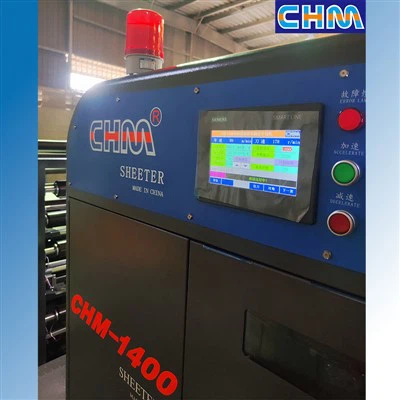
In the paper processing field, A4 paper cutting machines, with their series of distinctive features, have become highly efficient assistants in office, printing, and document processing scenarios. Understanding these features helps to recognize their advantages in improving work quality and efficiency.
First, they are highly efficient and fast. A4 paper cutting machines can complete the uniform cutting of large quantities of paper in a short time, processing dozens or even hundreds of pages at a time (depending on the model), far faster than manual page trimming. For tasks such as batch copying, trimming printed products, or document organization, it can significantly shorten operation time and make the workflow smoother.
Second, they offer precise cutting. The equipment is equipped with adjustable baffles and rulers, which can accurately position the paper to the standard A4 size or other required specifications, resulting in straight cuts and neat edges. The mechanically or electrically driven blade assembly operates stably, avoiding problems such as skewing and rough edges common in manual cutting, thus ensuring the consistency and aesthetics of the finished product.
Third, they are safe to operate. Modern A4 paper cutting machines are generally equipped with safety protection devices, such as transparent covers, two-hand start buttons, and travel limit switches. These designs effectively prevent accidental contact with the blade, reducing the risk of workplace injuries and ensuring personnel safety even in high-frequency use environments.
Furthermore, they are highly adaptable. Different models support various paper types and thicknesses, handling everything from ordinary copy paper to cardstock and laminated paper. Some models can be adapted to special needs by changing the blades or adjusting the pressure, meeting diverse scenarios such as post-printing processing and handcrafting.
Material savings are also a significant feature. Manual cutting often results in more waste paper edges due to dimensional deviations, while mechanical cutting can control waste to a low level. This advantage directly translates into economic benefits, especially in businesses where paper costs are high.
In addition, A4 paper cutters perform well in terms of stability and durability. High-quality models use robust metal frames and wear-resistant blades, combined with a reasonable transmission design, allowing them to withstand long periods of continuous operation without easily deforming or failing. Simple cleaning and maintenance are all that's needed to maintain good performance.
Finally, their flexible footprint and ease of integration broaden their application range. Desktop models are compact and can be placed on an office desk or workbench; floor-standing models are suitable for high-volume production environments. Some machines can be combined with printers, binding machines, etc., to form production lines, further improving overall production efficiency.
Overall, A4 paper cutters, with their high efficiency, precision, safety, adaptability, material saving, durability, and flexible layout, provide reliable support for various paper handling tasks and are an important tool for improving quality and efficiency in modern office and production processes.