Choosing a paper sheeter is not simply a matter of matching the machine to the paper's grammage. Two paper rolls with the same weight can behave differently during unwinding, cutting, and stacking.
Coating, fiber structure, stiffness, roll diameter, paper width, and the number of rolls processed simultaneously all affect how a paper sheeting line performs.
For paper mills, printing plants, and paper converting businesses, the real question is not just how many grams of paper a machine can cut, but whether it can process the material consistently under actual production conditions.
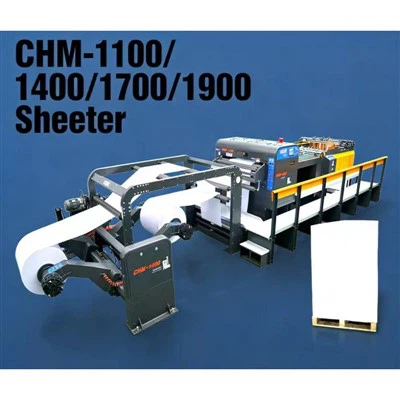
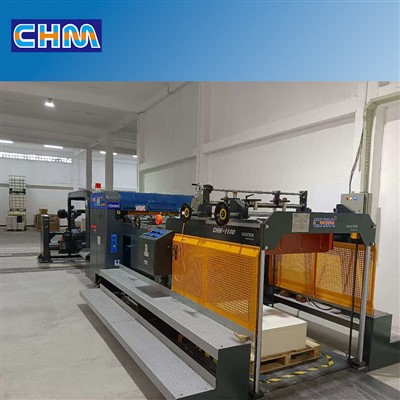
CHM Machinery provides Single Rotary and Double-Rotary paper sheeter solutions for different paper grades and production requirements. Understanding the characteristics of each material is the first step toward selecting the right configuration.

1. Lightweight Paper: Controlling Tension and Web Stability
Lightweight papers, including copy paper, writing paper, and thin paper, are widely used in printing and office paper production.
During sheeting, these materials can be sensitive to changes in web tension. Excessive tension may cause stretching, while unstable tension or uneven guiding can lead to wrinkles, web deviation, and inconsistent sheet dimensions.
When processing lightweight paper, manufacturers should pay attention to:
- Unwinding tension and synchronization between rolls
- Web guiding and edge alignment
- Paper curl and flattening
- Static electricity, particularly with thin or dry materials
- The compatibility of the cutting structure with lightweight paper
CHM's paper adaptation guidance generally prioritizes the Single Rotary structure for lightweight and flexible paper applications, with tension control, guiding, and static elimination configured according to the material.
For production involving multiple parent rolls, the number of rolls and their tension coordination should also be considered before selecting the machine.
The objective is to maintain stable paper movement throughout the line rather than simply increasing cutting speed.

2. Coated and Printing Paper: Protecting the Surface During Cutting
Coated paper, matte paper, and art paper are commonly used for commercial printing, catalogs, brochures, and other printed products.
Unlike uncoated paper, these materials have a treated surface. During processing, unstable tension, unsuitable pressure, or poor alignment may contribute to surface scratches, coating damage, paper dust, or uneven sheet quality.
The cutting process therefore needs to consider both dimensional accuracy and surface condition.
Important factors include:
- Stable servo-driven paper feeding
- Appropriate tension control
- Edge guiding and correction
- Static elimination
- Suitable knife and pressure roller configuration
CHM's adaptation materials identify servo drive, guiding, tension control, and static elimination as important considerations for coated and matte paper.
For printing applications, the equipment should be selected according to the paper's surface characteristics and the quality requirements of the finished sheets.
A machine that cuts the material successfully may still require adjustments to maintain consistent surface quality during continuous production.

3. Kraft Paper and Packaging Paper: Maintaining Stable Web Alignment
Kraft paper and ordinary packaging papers are used in bags, cartons, packaging materials, and other industrial applications.
Their fiber structure and mechanical properties influence how the paper behaves during unwinding and cutting. Depending on the grade, paper stiffness and roll characteristics can affect web alignment, tension stability, and cutting performance.
For these materials, equipment selection should consider:
- Paper stiffness and fiber structure
- Parent roll diameter and weight
- Unwinding roll quantity
- Web guiding and correction
- Pressure roller configuration
- Required finished sheet dimensions
CHM's adaptation manual places ordinary kraft paper and linerboard within its medium-weight printing and packaging paper category.
However, the appropriate configuration depends on more than grammage. A kraft paper application involving multiple rolls may require different unwinding and guiding arrangements from a production line processing one wider parent roll.
The machine should therefore be selected according to the complete production setup, including roll width, roll diameter, number of rolls, and required output.

4. High-Grammage Paperboard: Matching Cutting Resistance to Machine Structure
High-grammage paperboard presents different challenges from lightweight paper.
As paperboard becomes heavier and stiffer, cutting resistance increases. Depending on the material and cutting conditions, this may affect cutting consistency, edge quality, machine vibration, and the stability of the cutting system.
For these applications, manufacturers need to consider:
- Paperboard stiffness and cutting resistance
- Knife structure and cutting method
- Knife shaft and machine frame rigidity
- Parent roll weight and unwinding arrangement
- The number of rolls processed simultaneously
CHM's adaptation manual identifies 250–550 gsm high-grammage, rigid packaging card as a principal application range for its reinforced Double-Rotary configuration.
The manual also specifies single-roll unwinding for this application category.
This is an important selection point: a machine may have sufficient nominal grammage capacity, but the unwinding arrangement and mechanical configuration still need to match the actual paperboard.
For heavier board production, the choice between Single Rotary and Double-Rotary should be based on cutting resistance, material stiffness, required sheet quality, and the machine's specified configuration.

5. Special Paper: Considering Surface Properties and Processing Requirements
Specialty materials include PE-coated paper, laminated paper, moisture-barrier paper, metallic paper, and laser paper.
These materials may have surface properties that differ significantly from ordinary printing paper. Depending on the coating or composite structure, friction, adhesion, static electricity, and pressure sensitivity can affect the processing result.
Before selecting a paper sheeter, manufacturers should evaluate:
- Surface friction and potential material damage
- Whether the material requires anti-stick arrangements
- Unwinding tension and web stability
- Pressure roller suitability
- Static electricity
- Whether the material should be processed as a single parent roll
CHM's adaptation manual includes PE-coated, moisture-barrier composite, laminated, and laser paper within its special-material category.
For these applications, the machine configuration should be determined by the material's actual surface and handling characteristics. A standard configuration suitable for ordinary paper may not be the best choice for every coated or laminated material.
Trial processing is recommended when the material has unusual surface properties or when production requirements are particularly demanding.
Single Rotary or Double-Rotary: Which Structure Should You Choose?
Paper type provides a useful starting point, but the final machine selection should consider the complete production requirement.
Single Rotary Paper Sheeter
The Single Rotary structure uses a rotating upper knife and a fixed lower knife. It is commonly considered for flexible paper applications and a broad range of paper grades, depending on the model and configuration.
It can be suitable for lightweight paper, coated paper, kraft paper, and other materials when the cutting conditions and machine specifications are matched to the application.
Double-Rotary Paper Sheeter
The Double-Rotary structure uses synchronized upper and lower rotary knives. CHM positions this structure for applications involving higher cutting resistance, including heavier paperboard and packaging materials.
Its suitability depends on the material, required cutting quality, production speed, and the specific machine configuration.
Neither structure should be selected by grammage alone. Paper stiffness, coating, roll diameter, finished width, unwinding arrangement, and production requirements all need to be considered.
Choosing the Right Paper Sheeter Starts with the Material
Different paper grades require different approaches to unwinding, tension control, guiding, cutting, and stacking.
Lightweight paper requires stable web handling. Coated paper needs attention to surface quality. Kraft and packaging paper require suitable alignment and unwinding arrangements. Heavier paperboard places greater demands on the cutting structure and mechanical configuration. Special materials require evaluation of their surface and handling characteristics.
For paper mills and converting businesses processing multiple grades, the most suitable machine is the one that matches the actual material mix and production requirements-not simply the highest grammage or speed specification.
CHM Machinery offers Single Rotary and Double-Rotary paper sheeter solutions for different paper processing applications.
If you are planning a new paper sheeting line or upgrading an existing production process, contact CHM with your paper grades, grammage range, parent roll dimensions, and required sheet sizes. These details help determine a suitable machine structure and production configuration.
How to contact with us:
Email: chm007@szchm.com
Wechat/Phone/WhatsApp:+8617371066702
Follow me on Social Media:
Facebook: https://www.facebook.com/facebookCHMCassie/
Instagram: https://www.instagram.com/chm_sheeter_cassie/
LinkedIn: www.linkedin.com/in/chm-cassie-she-6b6200302
Youtube:www.youtube.com/@CassieShe