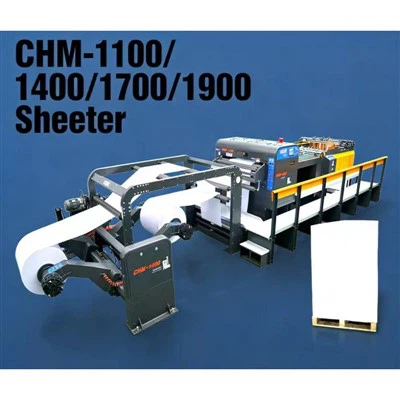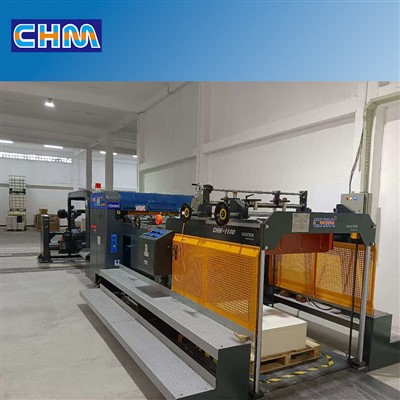
Roll paper sheeters rarely attract attention, yet they sit exactly where raw material becomes a sellable product. At CHM (Cheung Kong Machinery), we have spent more than 20 years building sheet cutting machines for that moment - the handover from jumbo roll to finished sheet, where precision and uptime decide whether a converting line stays profitable.
One Machine, Many Industries
A roll paper sheeter is not a single-purpose tool:
Packaging and label converting - label stock, tags and wrapping materials cut to repeatable sheet sizes.
Commercial and offset printing - consistent sheet dimensions so registration and downstream finishing stay stable.
Tissue and hygiene products - lighter grades for towels, napkins and tissue items.
Board and film converting - heavier or non-paper webs where tension control matters more than raw speed.
What changes between these applications is not the concept but the configuration: how material is unwound, tensioned, cut and stacked. That is the part CHM builds around your production reality rather than around a fixed catalogue number.
Customisation Is the Product
Every CHM roll paper sheeter is specified at quotation stage, using your own material samples and output targets. Rather than quoting a standard speed and accuracy figure that may not survive contact with your paper grade, we confirm the working envelope with you and document it before the machine is built.
| Configuration item | How CHM defines it with you |
|---|---|
| Working width | Matched to your jumbo roll width, confirmed from your roll data at technical review |
| Cutting speed | Set against your paper grade, sheet format and downstream capacity - not a headline figure |
| Cutting accuracy | Verified during factory acceptance testing on samples supplied by you |
| Sheet length range | Programmable; final working range confirmed per application |
| Material suitability | Paper, board, tissue and selected films, confirmed against your samples |
| Stacking and delivery | Layboy, conveyor or inline integration, matched to your floor layout |
You receive a specification document that reflects your own line, and the acceptance test measures the machine against that document - not against a brochure.
Twenty Years of Export Experience, Built Into the Specification
Two decades of exporting sheet cutting machinery teaches lessons that cannot be designed in a single afternoon. Voltage and frequency standards differ, ambient humidity changes how paper behaves on the knife, and maintenance skills and spare parts logistics vary by region. CHM folds all of this into the quotation: correct electrical configuration, English documentation, a recommended wear-parts kit and remote technical support after commissioning.
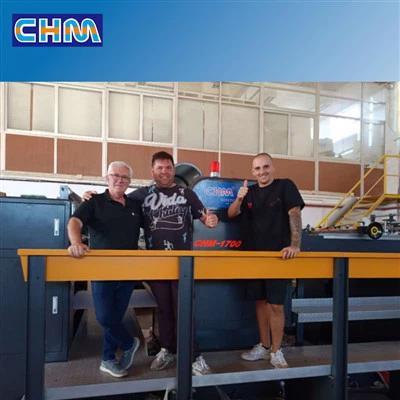
For buyers, that experience shows up in three practical places: a factory acceptance test before shipment, installation and operator training support, and a parts and service channel that stays reachable long after the invoice is settled.
Efficiency That Shows Up on the Balance Sheet
Automating the roll-to-sheet conversion removes the slowest and most error-prone step - manual handling between unwinding, cutting and stacking. Fewer manual touches mean fewer damaged sheets, fewer rejected batches and less dependency on operator experience. Because CHM measures actual output during acceptance testing, you know the real figure for your material before the machine is loaded.
Ready for Smart Manufacturing
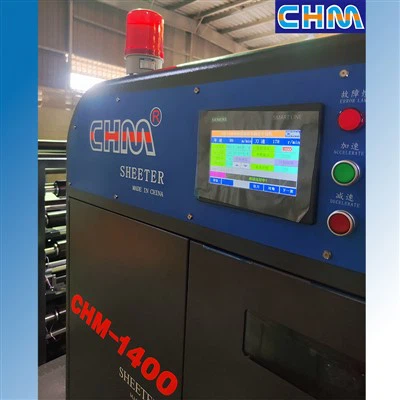
Where a line is moving towards connected operations, CHM sheeters can be supplied with PLC and HMI control plus data interfaces for production monitoring and remote diagnostics. Setpoints are adjusted from the control panel, run data can be logged, and maintenance can follow actual machine usage instead of a fixed calendar. These options are specified per project.
Sustainability Is a By-Product of Accuracy
Trim scrap is one of the quiet costs of converting. A sheeter that cuts only what the order requires - with programmable lengths and repeatable accuracy - reduces waste at the source. Fewer rejected sheets also mean less energy and material spent on output that never ships.
How to Specify Your CHM Sheeter
Prepare these six items and the technical review becomes fast and precise:
- Jumbo roll data: width, diameter, core size and maximum roll weight.
- Material range: paper grades and GSM range you will actually run.
- Target sheet formats: lengths, widths and required tolerance.
- Output requirement: sheets per shift or tons per day.
- Downstream equipment the sheets feed into.
- Site conditions: power supply, floor space and control language.
Talk to CHM About Your Line
CHM builds roll paper sheeters to a specification agreed with you, tests them on your material before shipment, and supports them after commissioning. If you are evaluating a sheet cutting solution for packaging, printing, tissue or board converting, send us your roll data and target formats - our engineering team will confirm the configuration that fits your line and issue a proposal based on your own production figures.
How to contact with us:
Email: chm007@szchm.com
Wechat/Phone/WhatsApp:+8617371066702
Facebook: https://www.facebook.com/facebookCHMCassie/
Instagram: https://www.instagram.com/chm_sheeter_cassie/
LinkedIn: www.linkedin.com/in/chm-cassie-she-6b6200302
Youtube:www.youtube.com/@CassieShe