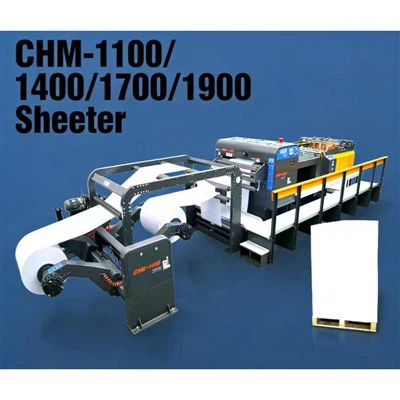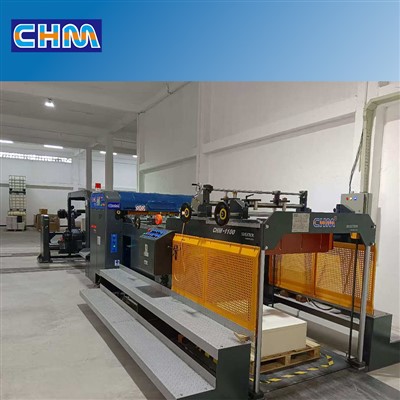
For e-commerce packaging machines to operate stably in a high-frequency order environment, their composition involves not only the selection and assembly of hardware modules but also emphasizes the coordinated layout and functional integration of each unit. A scientific composition method can improve equipment reliability, shorten installation and commissioning time, and facilitate subsequent maintenance.
I. Overall Composition Concept
E-commerce packaging machines generally consist of six major modules: a conveying unit, a forming unit, a sealing unit, a marking unit, a detection unit, and a control system. During design, the quantity and specifications of each module must first be determined based on production capacity and packaging specifications. Then, they should be arranged according to the process flow sequence to ensure smooth connection between material flow and information flow. The layout should consider floor space, operator accessibility, and future expansion possibilities.
II. Assembly Method of the Conveying Unit
The conveying unit is the equipment's inlet and outlet channel, typically composed of a frame, rollers or belts, a drive motor, and a tensioning device. During assembly, first fix the frame base and ensure its levelness, then install the rollers or belt idlers sequentially, ensuring uniform spacing and flexible rotation. The belt needs to be pre-adjusted to the appropriate tension (example data: deflection approximately 1%~2% of the span) to prevent deviation or slippage. The motor and reducer are connected via a coupling, and the speed is calibrated to match the conveyor belt.
III. Integration of the Forming and Sealing Units The forming unit includes a cardboard or film feeding mechanism, a bottom folding mechanism, and a side wing folding mechanism. During assembly, the material storage rack, pusher cylinder, and folding arm should be positioned according to the movement trajectory, centered on the forming station, to ensure that the folding process does not interfere with the conveyor belt. The heat sealing plate or tape machine of the sealing unit must be tightly connected to the forming station. The installation of sealing pressure or temperature elements must ensure uniform force and stable heat transfer. The air circuits of each pneumatic component should be arranged according to functional zones, and pressure regulating valves and filters should be installed to ensure clean air sources.
IV. Connection of the Marking and Detection Unit The marking unit consists of an inkjet printer, labeler, or printing module, and is usually installed after the sealing station and before the output. The installation location should consider unobstructed visibility, easy replacement of consumables, and compatibility with the communication interface of the control system. The detection unit, including photoelectric sensors, a vision camera, and a barcode scanner, should be positioned at key nodes (feeding, forming, sealing, and labeling). The support frame should be adjustable in height and angle to accommodate different packaging specifications.
V. Control System Wiring and Debugging
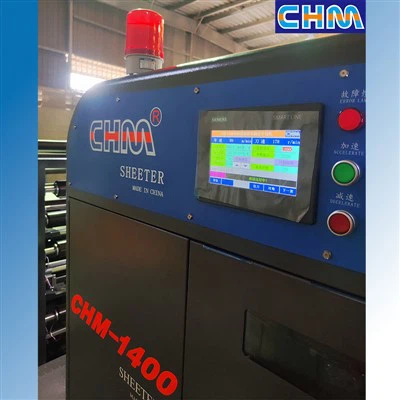
The control system is centered around a PLC or industrial computer, with peripherals including an operation panel, relays, frequency converters, and signal acquisition modules. During assembly, power and signal lines must be laid according to the electrical schematic, with strong and weak current wiring separated to prevent interference. All sensor and actuator addresses must correspond to the program, and point-to-point testing and action integration should be performed after initial power-on to ensure that each module operates collaboratively according to the set sequence.
VI. Overall Integration and Verification
After hardware assembly, a no-load run should be performed to verify the continuity of each unit's actions. Then, a test run with standard samples should be conducted to check dimensional accuracy, sealing strength, and label clarity. Based on the test run results, fine-tune the mechanical positions and program parameters until production efficiency and quality standards are met.
In summary, the composition method of e-commerce packaging machines is to divide functional units with a modular approach, assemble them in the order of the process flow and finely adjust them, so as to organically integrate mechanics, pneumatics, detection and control, thereby achieving efficient and stable packaging operations under the ever-changing e-commerce order scenarios.