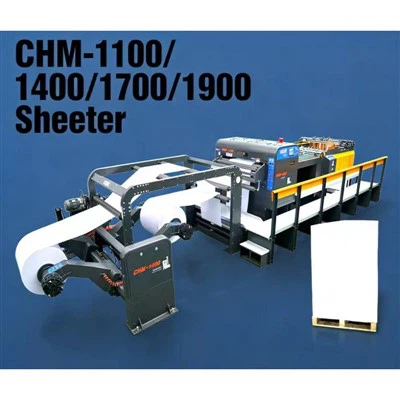
Single-Rotary vs. Double-Rotary Paper Sheeter: Four Key Configuration Differences Explained
In the paper converting industry, single-rotary and double-rotary paper sheeters are two of the most widely used types of sheeting equipment. Although both are designed to perform the same basic task-cutting paper rolls into sheets-there are fundamental differences in their cutter structure, edge guide system, anti-curl configuration, and delivery system.
These differences directly determine the machine's suitable paper types, cutting quality, and production efficiency.
1. Cutter Head: Single Cylinder vs. Double Cylinders
Lorem ipsum dolor sit amet consectetur adipisicing elit.
single rotary sheeter
The single-rotary sheeter uses a structure in which the upper knife rotates while the lower knife remains fixed. During paper feeding, the rotating upper knife cuts against the stationary lower knife.
Because the cutter head continues rotating regardless of whether the paper has reached the cutting position, the cutting action is continuous. This is essentially a flying-cutting process.
This structure is suitable for paper from 60–550gsm, with an ideal application range of approximately 60–250gsm.

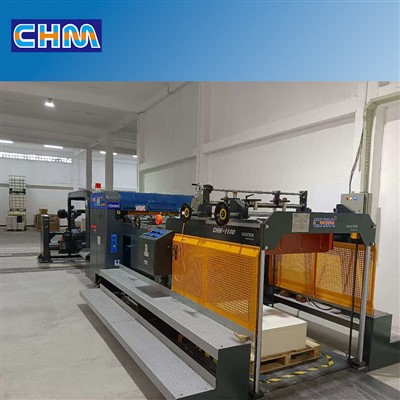
double-rotary sheeter
The double-rotary sheeter uses a structure in which the upper and lower knives rotate synchronously. It uses a follow-cutting principle. The cutter heads remain in a waiting position during paper feeding and only accelerate synchronously when the paper reaches the preset cutting position, completing the cutting action.
This structure is specifically developed for thicker paper and board, with a working range of approximately 150–1000gsm and an optimal application range of 200gsm and above.

The Key Difference:
Single-rotary: Upper knife rotates + lower knife fixed → flying-cutting impact process → suitable for 60–250gsm light and medium-weight paper
Double-rotary: Upper and lower knives rotate synchronously → follow-cutting process → suitable for 200–1000gsm heavy paper and board
In terms of cutting quality, the continuous rotation of the single-rotary cutter can result in a certain degree of angled cutting, with paper fibers and angled edges becoming more noticeable when processing thicker materials.
The double-rotary system uses a synchronized shearing principle. The upper and lower knives contact the paper simultaneously, producing a clean and flat cutting edge with minimal paper fiber.
The cutting force is also distributed more evenly, resulting in lower mechanical impact during cutting.
2. Edge Guide System: One Set vs. Two Sets
The purpose of the edge guide system is to keep the paper properly aligned before it enters the cutting area, ensuring accurate and square sheets.
single-rotary sheeter
The single-rotary sheeter is equipped with one set of automatic edge guides as standard. During paper feeding, the paper is aligned through a single guiding unit.
For conventional printing paper, office paper, and other light- to medium-weight materials, one set of edge guides is generally sufficient to meet production accuracy requirements.

double-rotary sheeter
The double-rotary sheeter is equipped with two sets of automatic edge guides as standard.
Because double-rotary machines are generally used for thicker and heavier paperboard, the material is more likely to shift during high-speed feeding. Two edge guide units perform alignment correction at different positions, helping ensure that heavy paperboard remains accurately positioned before entering the double-rotary cutting section.

3. Anti-Curl System: One Set vs. Two Sets
The anti-curl system is used to eliminate paper curl.
During unwinding, the internal stress of a paper roll can be released, causing the paper web to curl. The paper therefore needs to be flattened before reaching the cutting section.
single-rotary sheeter
The single-rotary sheeter is equipped with one set of anti-curl devices.
For conventional printing paper, office paper, and light- to medium-weight materials, one anti-curl unit is generally sufficient to release curl stress and ensure that the paper enters the cutting section in a flat condition.

double-rotary sheeter
The double-rotary sheeter is equipped with two sets of anti-curl devices.
Thicker paperboard and packaging materials generally have greater and more persistent curl stress during unwinding. Two anti-curl units provide a longer flattening path and allow the material to release internal stress more effectively.
This helps ensure that the paperboard remains flat during cutting and reduces cutting errors caused by curling.

4. Delivery System: Pressure-Roller Feeding vs. Aluminum Tube Pressure Conveying
The delivery section is responsible for smoothly conveying the cut sheets and forming an orderly stack.
single-rotary sheeter
The single-rotary sheeter uses a pressure-roller paper guiding and conveying system, with a relatively short delivery section.
Pressure rollers apply light pressure to the paper surface during conveying. This structure is suitable for high-speed transportation of light- to medium-weight paper.
Its relatively simple design also helps reduce equipment footprint.

double-rotary sheeter
The double-rotary sheeter uses an aluminum-tube pressure conveying system, with a significantly longer delivery section.
After cutting, thick paperboard still retains considerable rigidity and internal stress. A longer conveying path and continuous pressure from aluminum pressure rollers help keep the sheets flat and ensure orderly stacking.
The aluminum tubes are lightweight and have a smooth surface, allowing pressure conveying while minimizing the risk of damaging the paper surface.

5. Configuration Comparison
| Configuration | Single-Rotary | Double-Rotary | |
| Cutter Structure | Upper knife rotates + lower knife fixed | Upper and lower knives rotate synchronously | |
| Cutting Method | Flying-cutting impact process | Follow-cutting shearing process | |
| Suitable GSM | 60–250gsm (ideal range) | 200–1000gsm (optimal ≥200gsm) | |
| Cutting Edge | Angled edge, visible paper fibers | Clean and flat edge, minimal paper fibers | |
| Edge Guide System | One set of automatic edge guides | Two sets of automatic edge guides | |
| Anti-Curl System | One set | Two sets | |
| Delivery Method | Pressure-roller paper guiding, shorter delivery section | Aluminum-tube pressure conveying, longer delivery section | |
| Typical Applications | Printing paper, office paper, coated paper | White cardboard, coated board, kraft paper |
6. Selection Recommendations
We offer a variety of transmission components
Choose a Single-Rotary Sheeter When:
You mainly process 60–250gsm printing paper, office paper, coated paper, and other light- to medium-weight materials.
You are relatively sensitive to equipment investment costs.
Extremely low paper fiber at the cutting edge is not a critical requirement, or the sheets will undergo further processing.
Choose a Double-Rotary Sheeter When:
You mainly process 200gsm and above white cardboard, coated board, kraft paper, and other heavy paperboard.
You require clean cutting edges with minimal paper fibers and want the sheets to go directly into subsequent printing or converting processes without secondary edge treatment.
You prioritize long-term production stability and lower cutting costs per sheet.
Neither machine is simply "better" than the other. The key question is which machine is better suited to your application.
The right choice depends on your paper weight, material characteristics, quality requirements, and production objectives.
As demand for higher-quality paperboard processing continues to grow, double-rotary paper sheeters are becoming increasingly attractive for applications where cutting quality, production stability, and heavy-paper processing capability are critical.
How to contact with us:
Email: chm007@szchm.com
Wechat/Phone/WhatsApp:+8617371066702
Follow me on Social Media:
Facebook: https://www.facebook.com/facebookCHMCassie/
Instagram: https://www.instagram.com/chm_sheeter_cassie/