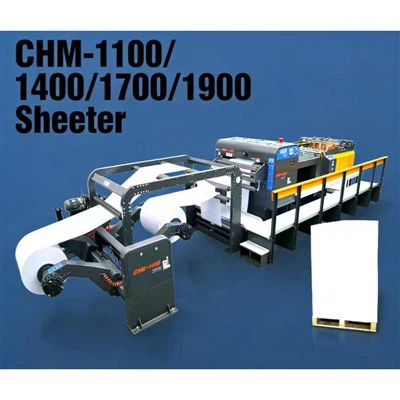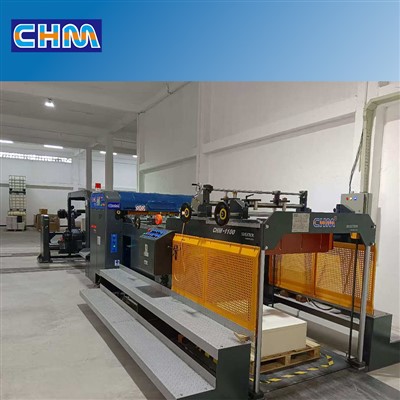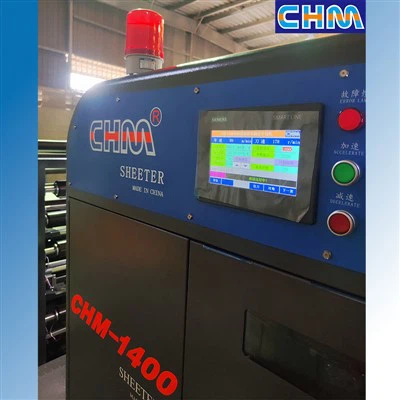
Does your paper sheeter belt constantly suffer from these problems?
- Cracking within three months of use
- Frequent belt misalignment
- Same issue reoccurs shortly after installing a new belt
- Technicians replace belts repeatedly, but the problem persists
If so, the issue may not simply be "poor belt quality."
For some older CHM paper sheeter models, frequent wear on the high‑speed and low‑speed drive belts can actually be caused by an undersized motor pulley.

Why Does an Undersized Pulley Shorten Belt Life?
When the pulley diameter is too small, the belt must bend more sharply during operation.
At high machine speeds, the belt undergoes continuous cycles of sharp bending, which increases tensile stress and mechanical fatigue. Over time, this leads to:
- Belt cracking
- Stretching
- Misalignment
- Unstable power transmission
- Noticeably shorter service life
This problem becomes especially pronounced during prolonged, high‑speed, continuous production runs.
Simply replacing the belt each time only addresses the symptom, not the root cause of repeated belt failure.
The Real Solution: Optimize Pulley Size
For older machines with this design limitation, CHM offers a retrofit that goes beyond routine belt replacement:
- Fit a larger motor pulley and optimize the VFD acceleration and deceleration parameters.
- Increasing the pulley diameter reduces the bending stress on the belt, improving the overall mechanical efficiency of the drive system.
- It is important to properly match the new pulley to the machine's operating speed, belt specifications, and drive parameters-this is more than just "bolting on a bigger pulley."

Frequent Belt Breakage Is Not Always a Belt Problem
If a belt needs replacement every few months, rather than increasing spare parts spending, first check:
Pulley sizing → Belt tension → Drive shaft alignment → Operating speed → VFD acceleration/deceleration settings
For older CHM paper sheeters with undersized pulleys, upgrading to a larger pulley and fine‑tuning the drive parameters can roughly double belt life.
When a customer says, "the belt broke again," the first instinct shouldn't be to simply order another belt.
Finding the mechanical root cause of frequent belt wear is the real key to reducing maintenance costs.
How to contact with us:
Email: chm007@szchm.com
Wechat/Phone/WhatsApp:+8617371066702
Follow me on Social Media:
Facebook: https://www.facebook.com/facebookCHMCassie/
Instagram: https://www.instagram.com/chm_sheeter_cassie/
LinkedIn: http://www.linkedin.com/in/chm-cassie-she-6b6200302