A4 copy paper is one of the most commonly used paper products worldwide. Every day, millions of reams are consumed in offices,, and facilities. Behind this everyday product is a highly automated manufacturing process that transforms large paper rolls into finished, packag4 paper
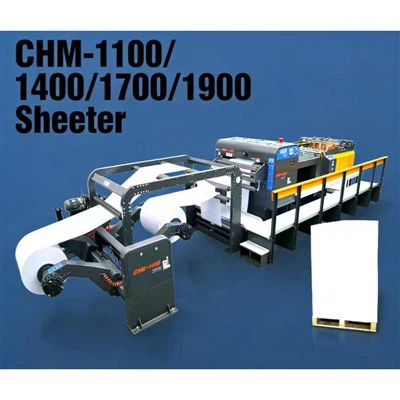
The process begins with jumbo parent rolls supplied by paper mills. These rolls are loaded onto the unwinding section of the production line, where automatic web guiding systems ensure stable paper feeding and maintain alignment throughout production. Consistent web control is essential because even minor deviations can affect cutting accuracy and final product quality.

After unwinding, the paper enters the slitting section. Here, the wide parent roll is divided into several narrower webs according to the required production format. Precision slitting is critical because accurate web widths directly influence the dimensional consistency of the finished A4 sheets. Modern slitting systems use high-precision knives and automatic guiding technology to maintain stable operation at high speeds.
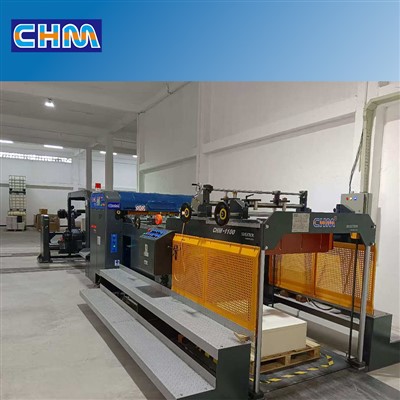
The slit paper webs then move into the cross-cutting section. This is where continuous paper is converted into individual A4 sheets. Advanced production lines such as the CHM A4 series utilize 6dual rotary knife technology to achieve continuous cutting with high efficiency and exceptional accuracy. The 006666 cutting system minimizes vibration and helps maintain cutting tolerances of up to ±0.2 mm, ensuring clean edges and excellent sheet squareness.
Once cut, the sheets are transferred to the counting and stacking system. Automatic controls count the sheets and organize them into standard reams, typically containing 500 sheets. Accurate counting is essential for maintaining product consistency and meeting customer expectations. The completed reams are then automatically conveyed to the packaging section.
In the wrapping stage, each ream is securely packaged using protective wrapping materials designed to prevent moisture absorption and transportation damage. The wrapped reams are subsequently transferred to the cartoning system, where they are automatically packed into cartons according to market requirements.
The final manufacturing stage is palletizing. Robotic palletizing systems stack finished cartons onto pallets in an organized pattern, improving handling efficiency and reducing labor requirements. The palletized products are then transported to the warehouse, where they are prepared for shipment to distributors and end users.
Modern A4 copy paper production lines integrate slitting, cross cutting, counting, wrapping, cartoning, and palletizing into a continuous automated workflow. By combining precision engineering with advanced automation, these systems enable paper manufacturers to achieve higher productivity, consistent quality, and lower operating costs while meeting the growing global demand for office paper products.