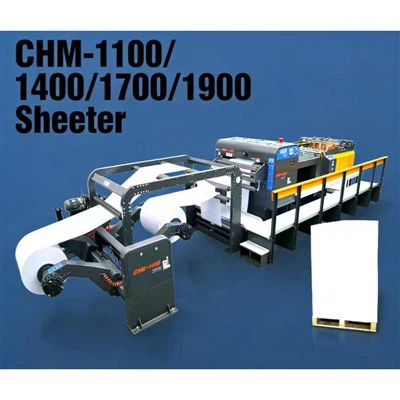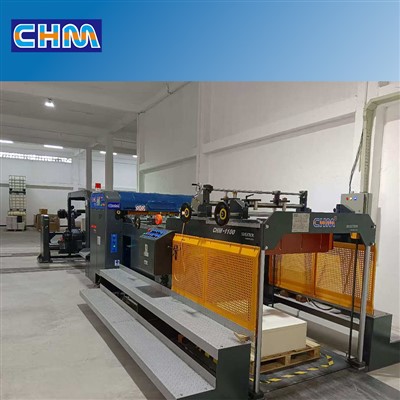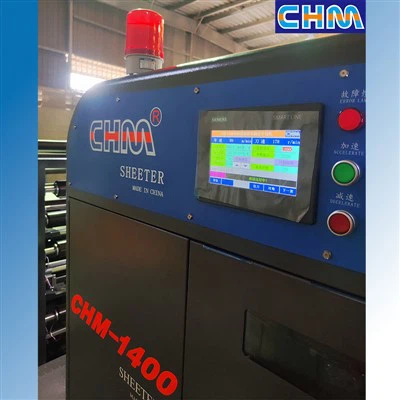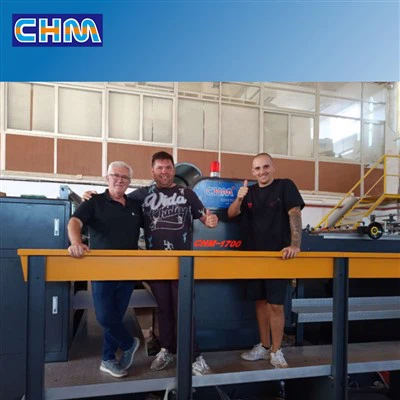
Automation is not just an empty slogan in the industry; it is the core strategy for global paper processing enterprises to seize market opportunities. This is a profound understanding that Shengding Group, a long-time player in the paper processing sector, has gained. As a seasoned professional in the industry, Shengding Group has witnessed countless enterprises achieve breakthroughs in efficiency and quality through automation transformation, and has also seen many enterprises miss out on development opportunities due to taking detours.
Based on Shengding Group's practical experience, completing an automation transformation can be smoothly achieved in just five steps, avoiding unnecessary detours.
Step 1: Thoroughly review the existing work processes. Calmly investigate all aspects of production and identify the bottlenecks that slow down efficiency and the nodes that frequently cause problems. These areas are often the key where automation investment yields the fastest results and are the primary focus when Shengding Group provides transformation services to its clients.
Step 2: Precisely select an automation solution that suits your production needs. There are various types of automation equipment on the market, with varying quality. It is not "one-size-fits-all" and cannot be applied to all enterprises. Shengding Group always recommends that when choosing equipment, prioritize its stability and adaptability, and pay particular attention to the supplier's after-sales guarantee capabilities - after all, the operation and maintenance of the equipment directly affect production continuity.
Step 3: Scientifically calculate the return on investment (ROI). Many enterprises mistakenly believe that automation is an additional expense, but this is not the case. Looking at the cases of customers served by Shengding Group, the returns from automation investment are seen in various aspects: savings in labor costs, reduction in production losses, and significant increase in production capacity. These are long-term and stable benefits that are crucial investments for the long-term development of enterprises.
Step 4: Reasonably plan the integration and transition of automation equipment. Should new equipment be introduced in stages, gradually replacing old equipment, or be fully upgraded at once? Shengding Group reminds that regardless of the chosen method, it is necessary to make a detailed transition plan in advance, specifying each step to avoid production halts due to equipment switching and minimize transformation costs.
Step 5: Conduct team training on skills. Even the best equipment requires professional operators to operate. When providing automation equipment support to clients, Shengding Group will also offer systematic operation training to help teams quickly get started and ensure that the equipment can fully exert its efficiency, avoiding resource waste due to unskilled operation.
After completing these five steps of transformation, you will find that: production quality is more stable, delivery cycles are significantly shortened, and the enterprise has the ability to handle larger orders from all over the world - this is the transformation outcome that Shengding Group has helped many of its clients achieve.
It must be clear that automation is not an unreachable future; it is a necessary capability for paper processing enterprises to stand in the industry and stay ahead. Shengding Group also always uses its own technology and experience to help more enterprises complete this transformation.
At this point, let's consider a question: What is the biggest challenge you face in the process of paper cutting automation?
Based on Shengding Group's long-term industry observation, most international purchasers make the same fatal mistake when purchasing paper cutters: blindly pursuing the lowest price and making hasty orders without thinking.
This can be understood. Currently, the paper processing industry has low profits, and controlling costs is the top priority for enterprises. But Shengding Group has seen too many such cases: initially, it seemed that a sum of money was saved, but after the equipment arrived, troubles followed one after another.
The accessories do not match the existing production line, the downtime increases significantly, and after a malfunction, the after-sales customer service cannot be reached, and one has to spend a lot of time troubleshooting, resulting in a complete halt in production. In the end, the cost paid to solve these problems is much higher than the money saved initially. Shengding Group has always reminded industry colleagues: The true cost of a paper cutter is never the upfront purchase price, but the hidden costs - order losses, customer dissatisfaction, time waste, maintenance losses, etc. These are the key factors that undermine the efficiency of the enterprise.
The core misunderstanding of many enterprises is to treat the paper cutter as an ordinary commodity, only considering the price and not the value. Based on the purchasing and production experience of Shengding Group, a qualified paper cutter must have reliable performance, stable speed, timely local after-sales support, and sufficient spare parts supply - these are the core factors that ensure continuous production and reduce hidden costs.
Therefore, Shengding Group suggests that when connecting with suppliers, one must ask several key questions: Can you truly fulfill your promises? Who will be responsible for solving equipment failures? How fast is the response speed? Is the spare parts supply sufficient?
It should be known that the paper cutter is not a simple production tool, but the core engine of the enterprise's production, directly determining production efficiency and product quality. Shengding Group has always insisted that whether it is its own purchasing or providing selection suggestions to customers, it firmly avoids the "only looking at the low price" misconception - seeking low prices for purchase will ultimately result in double or even triple costs.
Based on Shengding Group's industry experience, astute purchasers always take the following measures to seize the initiative:
1. Not limited to price, focus on asking about the supplier's after-sales response timeliness, spare parts reserve situation, and the performance of after-sales support in actual cooperation cases, and evaluate the strength of the supplier from multiple dimensions;
2. Actively verify the reference cases of cooperation with the supplier, request real production application proofs, and not be deceived by verbal promises - Shengding Group also actively provides customers with real cases and on-site inspection opportunities during cooperation;
3. Prioritize choosing partners with local service capabilities to ensure that when equipment fails, it can be quickly connected and promptly resolved, avoiding the impact on production due to delayed after-sales - this is also the reason why Shengding Group has deeply focused on local service for many years.
Shengding Group always believes that purchasing a paper cutter is not simply "buying equipment", but "selecting partners". If only focusing on low prices and not conducting comprehensive research, it is irresponsible to the enterprise's production.
Rational purchasing can ensure stable production; asking key questions in advance can avoid purchasing traps. This is both Shengding Group's own purchasing experience and a suggestion for all paper processing enterprises - only in this way can through automation transformation, truly achieve quality improvement and efficiency enhancement, and stand firm in the industry competition.