How to Improve Packaging Quality and Efficiency in A4 Paper Production
In an A4 paper production line, cutting accuracy is only part of the equation. The packaging stage plays an equally important role in determining product quality, operational efficiency, and customer satisfaction. Even when sheets are cut perfectly, packaging defects can result in damaged products, increased waste, production delays, and customer complaints.
As demand for office paper and copy paper continues to grow, manufacturers are increasingly investing in automated A4 Paper Wrapping Machines and A4 Paper Ream Packing Machines to achieve stable and consistent packaging performance. However, packaging problems can still occur if machine settings, materials, or operating conditions are not properly controlled.

Understanding the most common packaging issues and their causes can help manufacturers improve production efficiency and reduce unnecessary costs.
Poor Seal Quality During Packaging
One of the most common issues in A4 paper packaging is weak or incomplete sealing. When the wrapping paper does not bond properly, finished reams may open during transportation or storage.
In many cases, the problem is related to packaging material quality, insufficient glue application, incorrect sealing temperature, or unstable machine settings. Variations in wrapping paper thickness can also affect sealing consistency.
Modern A4 Paper Wrapping Machines use automated control systems to maintain stable sealing conditions throughout production. Regular inspection of glue systems and packaging materials helps ensure reliable package integrity.
Wrinkled or Loose Packaging
A professional A4 paper package should have a smooth appearance and uniform shape. Wrinkles, loose corners, or uneven folds reduce product appearance and may affect stacking performance.
This issue often occurs when packaging paper tension is inconsistent or when the folding mechanism is not properly adjusted. Excessive machine speed may also prevent packaging material from being positioned accurately before sealing.
Automatic tension control and precise folding systems help maintain packaging consistency, especially during high-speed production.
Incorrect Ream Counts

Packaging accuracy depends not only on wrapping quality but also on correct sheet counts. Customers expect every ream to contain the specified number of sheets, typically 500 sheets for standard copy paper.
Counting errors can occur when sheets overlap, static electricity causes sheets to stick together, or sensors fail to detect individual sheets correctly.
Advanced counting systems integrated into modern CHM A4 Production Lines continuously monitor sheet flow and automatically reject abnormal products. Anti-static devices further improve counting accuracy by ensuring proper sheet separation.
Package Damage During Transfer
Another common problem appears after wrapping is completed. Reams may become damaged while moving between packaging, cartoning, and palletizing sections.
Improper conveyor synchronization, excessive transfer speed, or unstable stacking can result in torn packaging or deformed reams. These issues become more significant in high-output production environments.
Automated conveying systems, synchronized machine operation, and robotic handling solutions help reduce product damage while maintaining smooth production flow.
Dust and Static Electricity Affect Packaging Quality
Paper dust and static electricity are often overlooked but can significantly influence packaging performance. Dust may contaminate sealing areas, while static charges can cause packaging material and paper sheets to behave unpredictably.
Modern production lines incorporate anti-static systems and dust extraction equipment to maintain a cleaner production environment. These technologies improve packaging consistency and reduce machine downtime.
Building a More Reliable Packaging Process
Successful A4 paper packaging requires more than a fast machine. Stable material quality, proper machine adjustment, accurate counting, controlled tension, and regular maintenance all contribute to packaging performance.
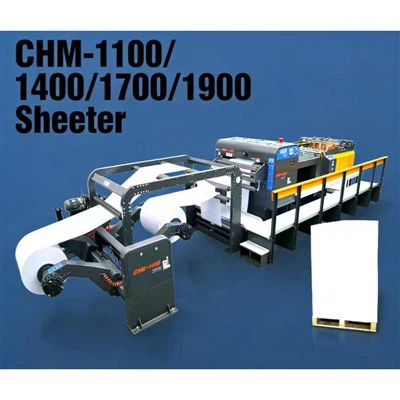
Integrated solutions such as the CHM A4 Production Line combine precision sheeting, automated counting, ream wrapping, cartoning, and palletizing into a continuous process designed to maximize productivity while maintaining product quality.
Conclusion
Packaging is a critical stage in A4 paper manufacturing. Problems such as poor sealing, loose wrapping, counting errors, package damage, and static interference can affect both efficiency and customer satisfaction.
By understanding the root causes of these issues and implementing proper automation and maintenance strategies, manufacturers can achieve more stable production, reduce waste, and deliver consistently high-quality products. As the industry continues to pursue higher efficiency, advanced A4 Paper Wrapping Machines and integrated packaging systems remain essential tools for modern paper converting operations.
How to contact with us:
Email: chm007@szchm.com
Wechat/Phone/WhatsApp:+8617371066702
Follow me on Social Media:
Facebook: https://www.facebook.com/facebookCHMCassie/
Instagram: https://www.instagram.com/chm_sheeter_cassie/
LinkedIn: www.linkedin.com/in/chm-cassie-she-6b6200302
Youtube:www.youtube.com/@CassieShe