

Product Introduction
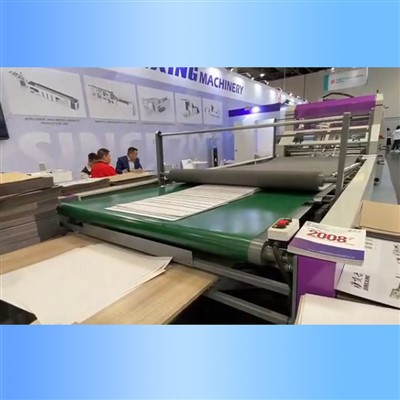
This inline high-speed flute laminator is designed for packaging and printing plants that require continuous production, stable quality, and reduced manual handling. By integrating laminating and automatic stacking into one line, it removes the traditional bottlenecks between processes and delivers a more efficient, controlled workflow.
Product Details
Payment & Shipping Terms

Product Description

Main Features
1. True Inline Production Structure
Unlike conventional laminators that require manual collection or separate stacking units, this machine combines laminating and flip-flop stacking in one continuous line. Sheets move directly from feeding to bonding and then to automatic stacking without interruption.
2. High-Speed Stable Output
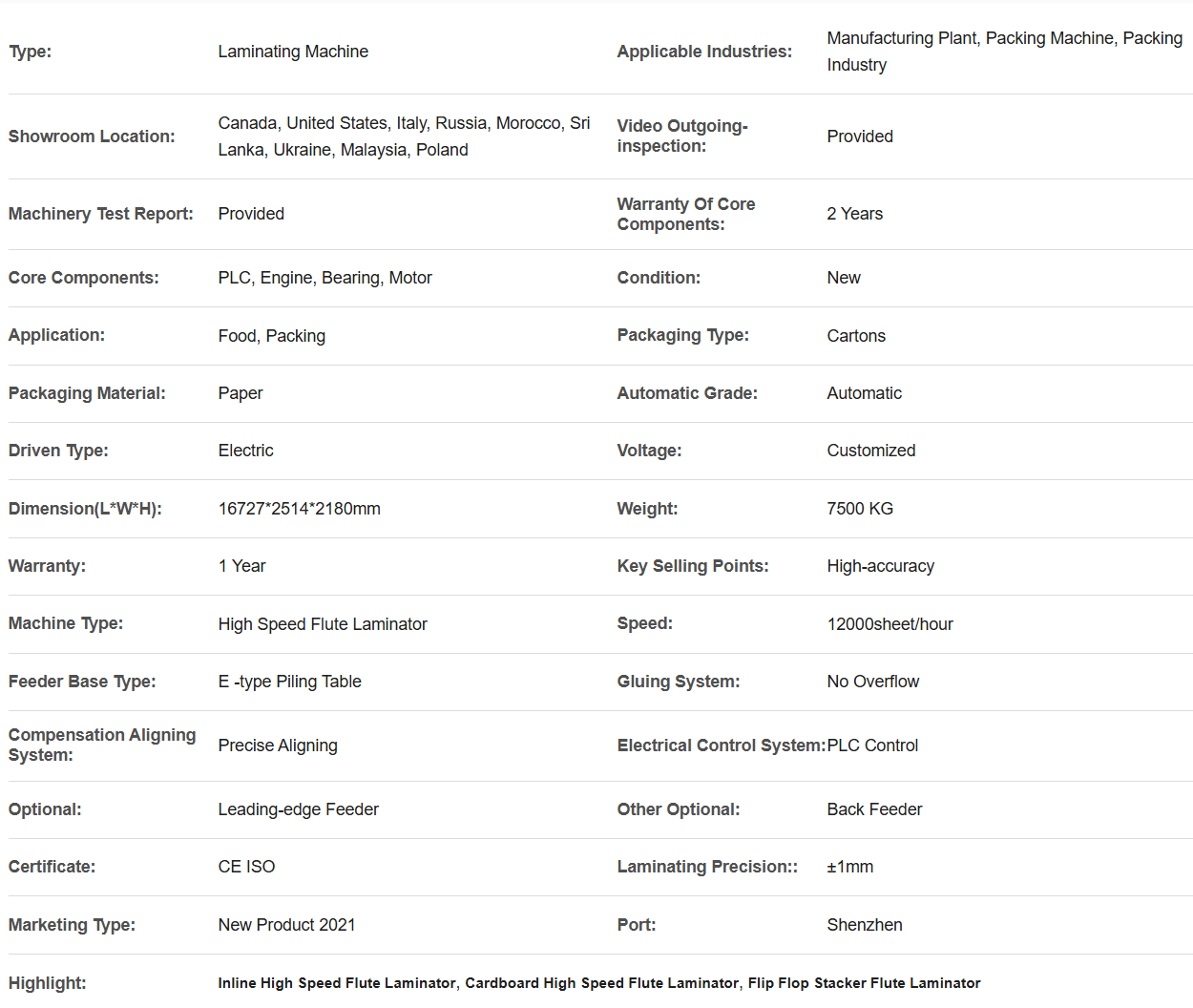
Operating at up to 150 m/min, the machine maintains consistent performance at around 12,000 sheets per hour (based on 600 mm sheet length). The structure is built to sustain long production runs without fluctuation in quality.
3. Servo-Controlled Feeding System
The top sheet feeder adopts a servo shaftless system, ensuring accurate overlapping and smooth delivery. The bottom feeder uses dual servo motors to handle multi-ply and warped boards with stability, which is critical in real production conditions.
4. Wide Material Compatibility
Supports a full range of materials including A–N flute corrugated boards (2-ply, 3-ply, 5-ply), grey board, and cardboard up to 10 mm thickness. This flexibility allows one machine to cover multiple product types.
5. Precision Aligning System
Multiple sensors continuously track the position of the bottom sheet. Servo motors automatically adjust the top sheet in real time, maintaining lamination accuracy within ±1 mm under proper conditions.
6. High-Performance Gluing System
The stainless steel gluing roller ensures even coating. The system includes side glue control and automatic glue level management, preventing overflow while maintaining consistent bonding strength at high speed. Glue recirculation minimizes waste.
7. E-Type Feeding Platform
The low-level E-type piling table allows direct loading by pallet truck. This reduces preparation time and improves efficiency during job changeovers.
8. Integrated Flip-Flop Stacker
The flip-flop stacking system automatically counts, aligns, and stacks finished sheets. This ensures neat, consistent piles and removes the need for manual collection, which is often a limiting factor in high-speed lines.
9. PLC Control with HMI Interface
The machine is controlled through a PLC system with a user-friendly interface. It provides real-time production monitoring, fault detection, and job recording, improving operational control and traceability.
10. Durable Transmission System
A combination of gears and belts distributes power evenly, reducing mechanical stress, lowering noise levels, and extending service life.
Working Principle
The process begins with the top sheet being fed through a servo-controlled feeder that ensures consistent overlap and timing. At the same time, the bottom sheet is delivered by a dual servo-driven system designed to handle thicker and multi-layer boards.
Both sheets enter the gluing section, where a precision roller applies a uniform adhesive layer. The sheets are then brought together in the laminating section, where the aligning system uses sensor feedback and servo correction to ensure accurate registration.
After bonding, the laminated sheets pass through a pressing conveyor to ensure proper adhesion. Finally, the sheets are transferred directly to the flip-flop stacker, where they are automatically aligned, counted, and stacked for the next process.
Machine Advantages
♦ Higher Effective Output
By eliminating manual stacking and reducing downtime between processes, the machine significantly increases real production efficiency, not just theoretical speed.
♦ Reduced Labor Requirement
The inline stacking system minimizes operator involvement. One operator can manage the entire line, reducing labor costs and dependence on manual handling.
♦ Consistent Product Quality
The servo control and automatic correction system maintain stable alignment and bonding quality across long runs, reducing rejects and rework.
♦ Better Adaptation to Real Materials
Many machines perform well only under ideal conditions. This machine is designed to handle warped, uneven, or multi-ply boards without compromising stability.
♦ Lower Operating Cost
Optimized glue control reduces consumption, while the durable transmission system lowers maintenance frequency and cost.
♦ Improved Workflow Integration
The inline design connects upstream and downstream processes more efficiently, making it easier to build a continuous, automated production line.
♦ Stronger Competitive Position
For packaging and printing factories handling large volumes, this machine provides a clear advantage in speed, labor efficiency, and product consistency.
FAQ
Q1: What makes this Inline High Speed Flute Laminator fundamentally different from a standard laminator?
A: This is not a standalone laminator. It is a fully integrated inline solution combining lamination and automatic flip-flop stacking in one continuous process, eliminating manual collection and significantly reducing labor dependency.
Q2: How does the inline flip-flop stacker benefit production efficiency?
A: It removes the bottleneck at the delivery end. Sheets are automatically counted, aligned, and stacked, allowing continuous high-speed operation without interruption or manual handling.
Q3: What production speed can users realistically expect?
A: The machine runs up to 150 m/min, reaching around 12,000 sheets per hour (based on 600 mm sheet length), maintaining stable output even in long production runs.
Q4: How stable is the feeding system at high speed?
A: The system uses a synchronized servo-controlled feeding structure, ensuring consistent sheet overlap and smooth transport, even with lightweight or warped materials.
Q5: How does it handle different types of board materials?
A: It supports A–N flute profiles, including 2-ply, 3-ply, and 5-ply corrugated boards, as well as grey board and cardboard up to 10 mm thickness, without requiring major adjustments.
Q6: What ensures lamination accuracy during high-speed operation?
A: A multi-sensor compensation aligning system continuously monitors sheet position, while servo motors dynamically adjust the top sheet to maintain precise registration within ±1 mm.
Q7: How reliable is the gluing system under continuous production?
A: The high-precision stainless steel roller system ensures uniform glue distribution. The glue recirculation system prevents drying and waste, while side glue control avoids overflow at high speeds.
Q8: Does the machine reduce glue consumption?
A: Yes. Controlled glue application and recirculation significantly reduce waste, keeping consumption stable and predictable across long production cycles.
Q9: What advantages does the E-type feeder base provide?
A: The low E-type piling table allows direct pallet loading, reducing manual handling time and enabling faster job changeovers.
Q10: Is the machine suitable for large-format production?
A: Yes. It supports formats up to 2100 × 2100 mm, making it ideal for large packaging applications and heavy-duty carton production.
Q11: How does the machine perform with warped or uneven boards?
A: The dual servo bottom feeder ensures stable transport of warped and multi-ply boards, minimizing feeding errors and improving finished product quality.
Q12: What role does the PLC control system play?
A: The PLC-based control system provides real-time monitoring, fault detection, and job recording, allowing operators to maintain full control over production conditions.
Q13: How user-friendly is the operation?
A: The HMI interface simplifies setup and operation. Operators can quickly adjust parameters, monitor performance, and respond to alerts without complex procedures.
Q14: What about maintenance requirements?
A: The transmission system combines gears and belts for balanced load distribution, resulting in lower wear, reduced noise, and minimal maintenance requirements.
Hot Tags: cardboard inline high speed flute laminator, China cardboard inline high speed flute laminator manufacturers, suppliers, factory, High Accuracy Flute Laminator Machine, triple wall laminator, 5 Layers Corrugated Flute Laminating Machine, flute lamination device, 7 Layers Corrugate High Speed Flute Laminator, Grey Paperboard High Speed Flute Laminator